
Blog
By: Katie Lea, Research & Development Project Coordinator, USDTL

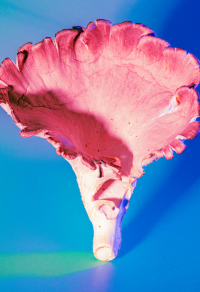
Magic mushrooms, or shrooms, are well known for containing psilocybin.1 Humans have ingested these mushrooms for centuries to experience mind-altering effects. In 1957, psilocybin was identified as the active component of a hallucinogenic mushroom extract. Since then, metabolic studies have revealed that psilocybin is rapidly converted to psilocin in the body.2 Low levels of psilocin may also be present in the mushroom itself.1 Psilocin is structurally very similar to serotonin and binds to the same receptors in the brain, causing changes in perception and mood. It is now understood that psilocin, not psilocybin, is primarily responsible for the psychedelic “trip” following magic mushroom consumption.
The effects of magic mushrooms can vary widely depending on an individual’s mindset, body type, and level of tolerance.1 Psychedelic effects typically begin 30-60 minutes after ingestion and last between 3-6 hours.1 There is evidence that some effects may last up to 12 hours.3 Magic mushrooms are generally perceived as safe due to the rarity of overdose and low potential for addiction.1 Some common negative effects include nausea, vomiting, dizziness, muscle weakness, and lack of coordination.3,4 At high doses, panic and psychosis may occur.4 Additionally, psychedelic effects can lead to harmful and potentially fatal behaviors.3 There is also a risk of exacerbating existing psychological disorders such as schizophrenia.1
Magic mushrooms are usually not included in routine drug testing.3 As mentioned, psilocybin is rapidly converted to psilocin in the body; therefore, detection of psilocin in a biological specimen could indicate magic mushroom use.2,5,6 Psilocin is a particularly unstable chemical, but a majority of psilocin excreted in urine is present as the glucuronide metabolite, offering better stability and chance for detection.2 Still, urine specimens should be wrapped in foil and shipped in an insulated box with cold packs to prevent degradation from light, heat, and air.2 The detection of psilocin in hair or nail specimens may also indicate past magic mushroom use. Literature regarding psilocin in keratinized specimens is scarce, but there are two published reports of psilocin detected in the hair of hallucinogenic mushroom consumers.5,6 With either specimen type, psilocin’s instability creates challenges in identifying past magic mushroom use. Care must be taken during specimen collection and analysis to minimize degradation of the drug in order to obtain the most accurate results.
References
- Lowe H, Toyang N, Steele B, Valentine H, Grant J, Ali A, Ngwa W, Gordon L. The Therapeutic Potential of Psilocybin. Molecules. 2021; 26(10):2948. https://doi.org/10.3390/molecules26102948
- Dinis-Oliveira, R. J. (2017). Metabolism of psilocybin and psilocin: clinical and forensic toxicological relevance. Drug Metabolism Reviews, 49(1), 84–91. https://doi.org/10.1080/03602532.2016.1278228
- Malaca S, Lo Faro AF, Tamborra A, Pichini S, Busardò FP, Huestis MA. Toxicology and Analysis of Psychoactive Tryptamines. Int J Mol Sci. 2020 Dec 4;21(23):9279. doi: 10.3390/ijms21239279. PMID: 33291798; PMCID: PMC7730282.
- DEA Drug Fact Sheet: Psilocybin https://www.dea.gov/factsheets/psilocybin
- Zhou, L., Xiang, P., Wen, D. et al. Sensitive quantitative analysis of psilocin and psilocybin in hair samples from suspected users and their distribution in seized hallucinogenic mushrooms. Forensic Toxicol 39, 464–473 (2021). https://doi.org/10.1007/s11419-020-00566-3
- Kintz, Pascal & Raul, Jean-Sébastien & Ameline, Alice. (2021). Testing human hair after magic mushrooms abuse by LC-MS/MS: Pitfalls and limitations. Forensic Chemistry. 26. 100364. 10.1016/j.forc.2021.100364. https://doi.org/10.1016/j.forc.2021.100364
It’s easy to get started!

Video Resources
Additional Resources
- Weather Delay
- Forensic vs. Clinical Drug Testing: Why Flexibility Matters for Your Organization
- USDTL’s Integration and Partnership With CourtFact
- New Year, New Capabilities: Offering Forensic & Clinical Testing Options
- Weather Delay
- The Detection of Delta-9-tetrahydrocannabinol, Delta-8-tetrahydrocannabinol, Delta-10-tetrahydrocannabinol, and Cannabidiol in Hair Specimens
- Umbilical Cord Tissue Testing for Ketamine
- Drugs of Abuse: A DEA Resource Guide (2024)
- September 2026 (1)
- February 2026 (1)
- January 2026 (3)
- October 2025 (1)
- July 2025 (3)
- May 2025 (2)